


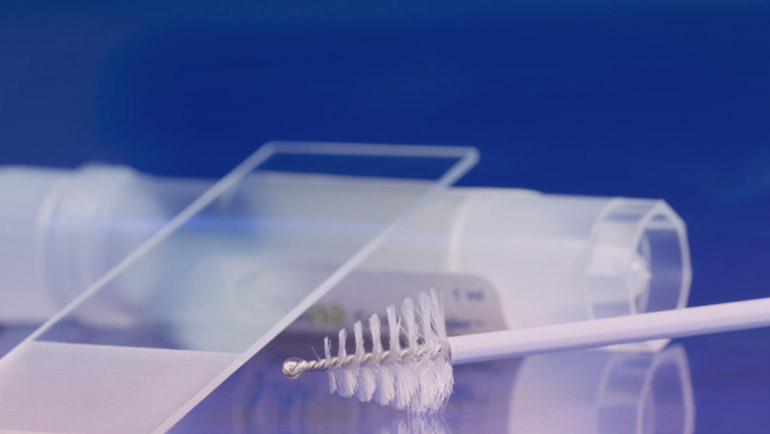
What is Genital Wart?
HPV virus is an infection that is most commonly sexually transmitted and causes warts in the vagina and external genitalia. HPV infection is generally seen at a higher rate in women who have started sexual life early and have had a large number of sexual partners. This infection is the most common sexually transmitted disease worldwide.
WHICH WAYS IS THE HPV VIRUS TRANSMITTED?
Oral and anal sexual intercourse is an important factor among the sub-causes of sexual transmission of the HPV virus. The probability of genital wart transmission is close to 60% among sexually active partners. Due to HPV, which is a highly contagious virus, the incidence rate in sexually active women has approached 50%. One of the most frequently wondered points is the other transmission routes of HPV. HVP can be transmitted from places such as shared towels and sheets, toilets, pools or public places such as baths, although rarely. Many factors are involved in the transmission of HPV. The most common risk factors in HPV positive patients are as follows:
- -Unprotected sexual intercourse
- -Early onset of sexual intercourse
- -Multiple sexual partners
- Vulnerability of the immune system to the risks of HPV
Can HPV VIRUS BE SEEN IN CHILDREN AND YOUNG PEOPLE?
HPV virus is not only a condition that occurs in adults. HPV virus and genital warts can also occur in children and young people. This means that sexual intercourse is not the only way of transmission. In children under 2 years of age, anogenital warts are caused by HPV infection transmitted to the child through the mother's anogenital tract. Another recently identified cause of warts in children is sharing private areas such as the bathroom with patients who have the HPV virus. Therefore, if the mother or the caregiver of the baby is HPV positive, they should pay close attention to hygiene rules.
Areas such as public restrooms, public baths and saunas are particularly risky areas for HPV and genital warts. Hygiene rules should be very careful when using such public areas. Areas that are not sufficiently hygienic should not be used as they can be risky for both children and adults.
WHICH PARTS OF THE BODY CAN BE VISIBLE IN HHPV INFECTION?
In women, HPV infection and warts are most common in the following areas:
- External genital organs
- Vaginal area
- Cervix (cervix)
- Mid thigh circumference
HOW CAN I KNOW I HAVE GENITAL RASH? what are the symptoms of genital warts?
It is important to know the symptoms of genital warts in order to prevent the condition from progressing and becoming more difficult to treat as a result of not recognizing a condition in the short term. The general symptoms are palpable tiny bumps, bleeding and itching. If your complaints of bleeding and itching in the genital area increase, warts may have occurred.
Warts can grow unnoticed for a while because they do not show symptoms very clearly. Warts, which can appear as a bump on the skin or a brownish flesh mole, are usually very small, so they can take time to be recognized. While warts may be relatively small at first, their millimetric size may increase over time and the area they cover may increase. For this reason, every woman should examine her external genital organs once a month with the help of a mirror. However, it is also very important that women with risk factors do not neglect their routine gynecological examinations. Symptoms of warts in women usually appear on the external genitalia. Bleeding during sexual intercourse is among these symptoms. In the external genital area, itching may occur. When a genital wart occurs in a visible part of the body, it can be easily recognized by the patient. Early intervention is of great importance in terms of the growth and spread of warts.
Do genital warts appear immediately after infection with HPV? how long does it take for the disease to become visible?
Warts do not appear immediately after infection with HPV. Depending on the immune system, if the warts, which are destroyed in most of the infected organisms, remain in the body, it may take between 3 weeks and 2 years for them to appear with a lesion and turn into a wart. Some women may not develop HPV-related genital warts even if they have HPV infection. After infection with the HPV virus, the following conditions are also strongly associated with its appearance.
- Whether a person has a strong immune system
- The occurrence of different infections in the body
- Age and related reactions of the organism
What is the most risky age range for genital warts?
When the risks of infection in cases of genital warts are analyzed, the greatest risk group is between the ages of 15-24. Considering the large share of transmission of the virus through sexual intercourse, we can say that it is higher among young people. In women, the highest incidence of warts was observed in the 20-25 age range. Of course, there are also women outside this age group who have warts. Although it is more common in young people, it should be noted that genital warts can also be seen in middle-aged or elderly individuals. The HPV virus can be seen in individuals of all ages. Since it can occur even in children, we can state that it is a risk factor for every age group without exception.
HPV Virus and Cervical Cancer
The HPV virus has around 100 different types, and not all HPV types trigger genital warts. However, high-risk HPV types, especially types 16 and 18 HPV groups, can cause various diseases. There is a high correlation between HPV and cancer, but depending on the immune system of the person, this virus does not turn into cancer in all cases. Therefore, it is important to be careful against this virus, to take precautions and to see a doctor without delay if necessary.
HOW CAN I PROTECT MYSELF FROM HPV VIRUS?
One of the most serious measures against HPV, which can cause serious diseases through genital warts, is vaccination. Other factors that are effective against HPV and prevent transmission include paying attention to hygiene rules and protection during sexual intercourse.
HPV Types?
Each of the HPV types has almost unique characteristics. Some HPV types may not cause any symptoms in the body. Some HPV types can cause serious health problems that can lead to cancer. In general, the most common HPV types are categorized as high-risk and low-risk. High-risk HPV types are 16, 18, 31, 33, 35, 39, 39, 45, 51, 52, 56, 58, 59, 68, 73, 82. Low-risk HPV types are 6, 11, 40, 42, 42, 43, 44, 54, 61, 70, 72, 81.
Can Genital Warts be Treated with Laser?
Laser technology is among the methods used to remove genital warts. It can also be said that it is one of the most effective methods to get rid of genital warts without surgery. Laser treatment of genital warts can be performed under local anesthesia or sedation-style anesthesia if the patient's pain threshold is low or if there are very common genital warts.
What are the Types of HPV?
Each HPV type has almost unique characteristics. Some HPV types do not cause any symptoms in the body and cause no complaints. Some HPV types can cause serious health problems that can lead to cancer. In general, the most common HPV types are categorized as high-risk and low-risk. High-risk HPV types are 16, 18, 31, 33, 35, 39, 39, 45, 51, 52, 56, 58, 59, 68, 73, 82. Low-risk HPV types are 6, 11, 40, 42, 42, 43, 44, 54, 61, 70, 72, 81.
Can Genital Warts be Removed with Laser?
Laser technology is among the methods used to remove genital warts. It is possible to state that it is one of the most effective methods to get rid of genital warts without surgery. It is possible to get rid of genital warts with a single application accompanied by a very comfortable process for the patient. Since there is no incision, there is no need for stitches.
Is it necessary to have a test before genital wart treatment?
A sample is taken for HPV typing before genital wart treatment. Treatment is a process that can be started with the diagnosis after the examination and examination.
Genital Warts and Pregnancy
If the warts are extremely large, they can interfere with normal delivery. In this case, cesarean delivery is recommended. However, cesarean delivery should be preferred in patients with active HPV infection.
Genital Wart Treatment
There are several different treatment methods for genital warts on the body. Among these, the excisional method is the most common. In the excisional method, warts are removed with a surgical intervention. In the treatment method called destructive method, the warts are burned and thus eliminated. The method called cryotherapy is a treatment protocol applied on freezing genital warts. Since all treatments are performed under anesthesia, it is not possible for the patient to feel any pain or ache.
Can genital warts be treated with medication?
If the warts have not grown too much, are not in a tendency to grow and have not spread too much, drug treatment may be possible. However, other treatment methods should be applied for warts that tend to spread or grow.
Do Genital Warts Grow During Pregnancy?
Pregnancy is one of the periods when the body's resistance is weakest. For this reason, the virus that has not previously manifested itself in the form of warts may cause warts to appear during pregnancy. Appropriate treatment can also be started during pregnancy. There is no need to wait for the end of pregnancy.
Can genital warts recur?
Unfortunately, genital warts may tend to recur, regardless of the treatment method used. However, this does not mean that they recur in everyone. It is also observed that some people do not regrow warts after a single treatment. Research shows that factors such as unhealthy diet, stress and a weak immune system increase the likelihood of recurrence.
Can HPV infection be transmitted to a partner after treatment for genital warts?
It should be remembered that the treatments applied are aimed at eliminating the warts, not the HPV virus. Therefore, even if the warts disappear, the HPV virus can be transmitted to the partner after the treatment and this may cause genital warts to appear in the partner.
Does a biopsy need to be done for genital warts?
If the physician has a suspicion that the existing tissue is genital warts, a biopsy may be needed. However, an experienced physician can confirm the diagnosis without taking a biopsy.
If a genital wart does not reappear, does it mean that it has been removed from the body?
Unfortunately, this is not the case. Because it can take 3 weeks to 2 years for the HPV virus to manifest itself in the body with genital warts. Therefore, the fact that pre-existing genital warts do not reappear after laser or surgical removal does not mean that the HPV virus has been eliminated from the body. Because in some people, these warts do not grow again. Since it is not necessarily a situation that will recur, the absence of warts does not mean that the virus is not present. Attention should be paid to the warnings made by the doctor. It would be wrong to ignore these warnings in the absence of genital warts.
How to tell if the HPV virus is still present after treatment
Testing is necessary for this. In many patients, the HPV virus that causes genital warts can be eliminated spontaneously by the body. However, in order to understand this, the relevant test must be performed. As we have already mentioned, the absence of genital warts does not mean that the HPV virus has been eliminated from the body. It is very important for people who have already contracted this virus to have regular check-ups. During these checks, the test can be repeated if deemed necessary by the doctor. If the person wants to get information on this subject or is curious, the test can be performed to see if the HPV virus is present.
Can HPV Virus Change Type in the Body?
No. The type of HPV virus that infects the person does not change in the body. These types are numbered and grouped as high risk group and low risk group. The type of HPV virus found in the person is determined by the test. This type does not change afterwards. A person infected with only one type of HPV virus can be infected with another type of HPV after getting rid of this virus.
How to decide which method to use to remove genital warts
This decision should definitely be made by a physician. Removing these warts with laser is of course the most comfortable treatment for the patient. For this reason, laser technology is mostly used to remove genital warts. It may be possible to remove these warts in a single session. However, the critical point is this: depending on where the warts are located, they may need to be removed by conventional surgery instead of laser technology. It may also be the case that the existing tissue is not suitable for laser removal.
What is Cervical Cancer?
Cervical cancer, or cervical cancer, is one of the most common female cancers in women in the sexually active age group. Cancer precursor cells arise when the cell layer that forms the surface of the cervix turns into abnormal cells.
When cancer precursors are not detected and treated early, they cause cervical cancer. HPV is responsible for this change. This virus is usually sexually transmitted. Cervical cancer does not cause symptoms in the early stages. However, vaginal bleeding, discharge, mass sensations are the most common symptoms of cervical cancer.
Does condom use prevent the transmission of genital warts?
All couples use condoms to protect against diseases and prevent unwanted pregnancies. Condom use also provides protection against other sexually transmitted diseases. It should be kept in mind that even if a condom is used during sexual intercourse, it is not possible to provide one hundred percent protection.
Can HPV be transmitted outside of sexual intercourse?
The fact that HPV is also seen in younger age groups such as children and adolescents who are not sexually active is proof that HPV infection can be transmitted in ways other than sexual intercourse.
These diseases can also be transmitted through toilets used by others, underwear, blood and skin contact. We should be very careful about many diseases such as HPV, which are popularly known to be sexually transmitted. Because these diseases can infect individuals in ways other than the sexual route. In order to prevent the disease, experts recommend that hygienic products such as razors, toothbrushes and nail clippers used by others should not be used by others.